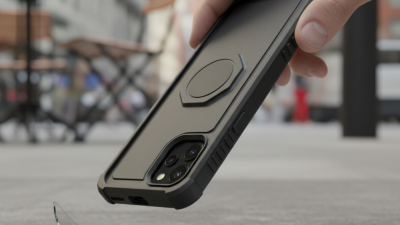
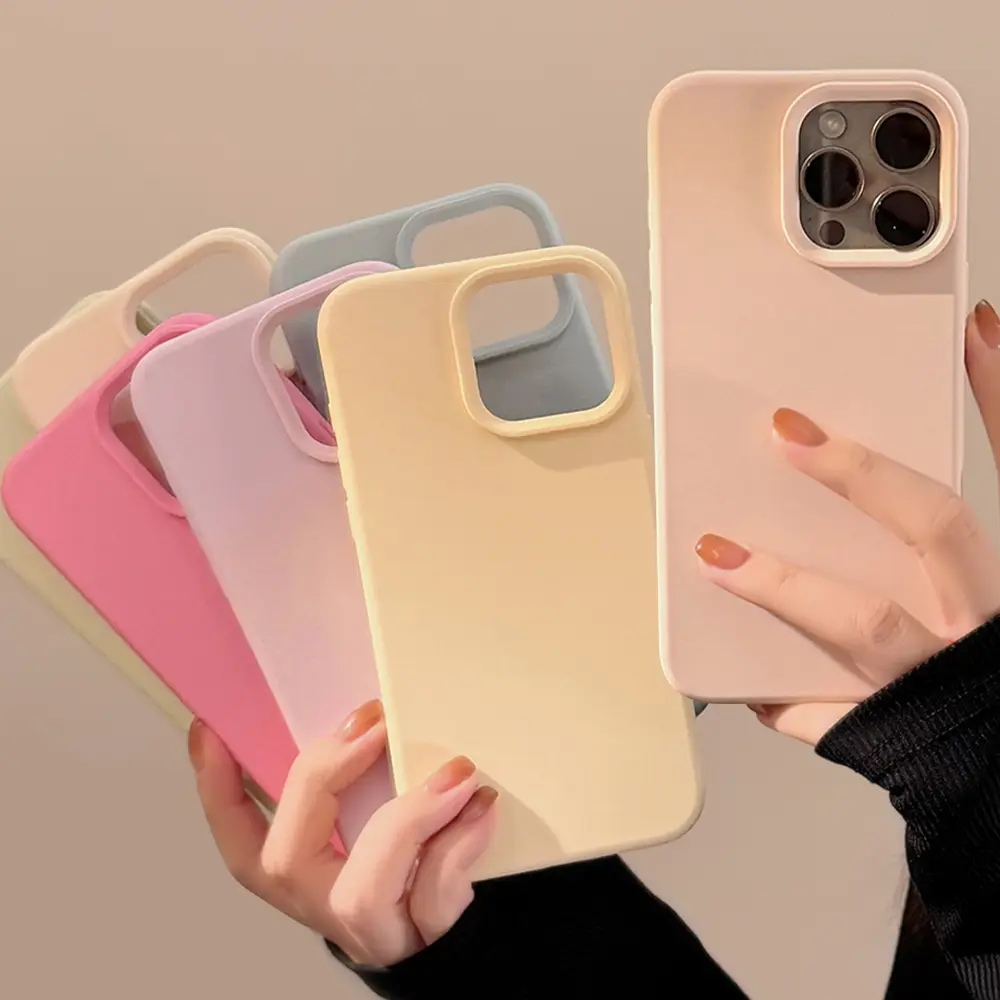
Choosing the best Phone Case supplier requires more than comparing prices and catalog photos. A supplier may promise premium protection, yet the finished case can feel brittle, slippery, or poorly aligned. I have seen attractive samples fail during simple drop tests, especially around camera openings and charging ports. Small details matter.
Jony Ive, a respected product-design expert, once said, “Design is not just what it looks like and feels like. Design is how it works.” His principle applies directly to every Phone Case supplier. The case must protect the device, fit precisely, and remain comfortable during daily use. Ask suppliers for material specifications, test reports, production samples, and clear quality-control procedures. Check whether buttons respond naturally and whether wireless charging still works. Test several units, not only one perfect sample.
Look beyond the lowest quotation. A reliable supplier should explain minimum order quantities, tooling costs, lead times, packaging, and replacement policies. Communication matters too. Slow replies may become serious delays after payment. Product consistency is essential. One strong sample proves very little.
Still, no checklist is perfect. Supplier claims require verification. Independent testing can reveal weaknesses that marketing language hides. Consider recycled materials, factory conditions, and transparent sourcing without accepting vague promises. Review customer feedback carefully, but remember that reviews can be incomplete. The right partner combines dependable manufacturing, honest communication, practical design knowledge, and stable after-sales support. Your final choice should protect both the phone and your brand’s reputation.
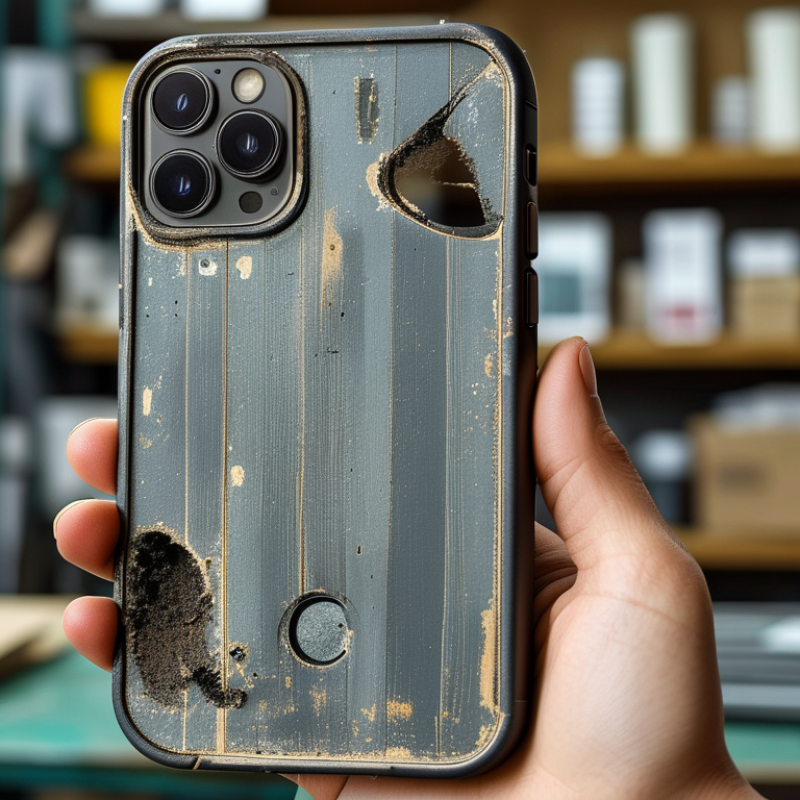
Your target customer should shape every supplier requirement. According to IDC’s Worldwide Quarterly Mobile Phone Tracker, global smartphone shipments reached about 1.24 billion units in 2024. This scale creates opportunity, but demand is divided by device model, age group, lifestyle, and budget. A student may prefer a slim, colorful case. A delivery worker may need stronger corner protection and grip. Define compatible models, materials, colors, packaging, order quantities, and acceptable defect rates before requesting quotations. Ask suppliers for sample cases, abrasion tests, drop-test evidence, and material specifications. Some suppliers provide impressive samples, then reduce quality during mass production. I learned this the expensive way.
Tips: Build three customer profiles. Record their phone models, buying reasons, price limits, and daily risks. Then create a simple requirement sheet. Include dimensions, camera clearance, button pressure, printing quality, and packaging details. Do not choose a supplier only because the unit price looks low.
Market data can guide your assumptions. Allied Market Research estimated the global smartphone accessories market at approximately 96.96 billion dollars in 2021, with continued growth forecast through 2031. However, broad market figures do not prove your niche will sell. Test a small batch with real users. Measure returns, scratches, fit complaints, and repeat purchases. A supplier with slightly higher costs may offer better consistency, clearer communication, and lower replacement losses. Keep reviewing your requirements, because customer preferences change faster than product catalogs.

Choosing a phone case supplier requires more than comparing catalog photos. Product quality should be checked through physical samples and repeat testing. Examine edge alignment, button response, camera clearance, and charging-port access. A reliable case should feel secure without making the phone difficult to use. Ask how each batch is inspected. Small defects often reveal weak production controls.
Material selection affects protection, comfort, and appearance. Polycarbonate usually provides firm structure, while TPU can improve shock absorption and grip. Hybrid construction may offer both benefits, but it can increase cost and weight. Check for surface cracking, strong odors, color transfer, and yellowing after light exposure. Request material specifications and independent test reports when available. Do not rely only on a supplier’s verbal claims.
Design flexibility also matters for different customer groups. Evaluate clear, matte, textured, slim, rugged, and wallet-compatible options. Review sample colors under natural light, not only on a screen. Ask whether the supplier can adjust logos, textures, packaging, or camera protection without changing performance. I once accepted a beautiful sample that became slippery during daily use. That mistake changed my evaluation process. Supplier promises are useful, but measurable samples are more dependable.
| Evaluation Category | Key Metric | Recommended Benchmark | What to Verify | Importance |
|---|---|---|---|---|
| Product Quality | Drop protection | The case should protect the intended phone model during repeated drop testing from approximately 1.0–1.5 m, depending on the product positioning. | Request a documented test method, sample test results, corner-impact images, and confirmation that the test model matches the final design. | High |
| Product Quality | Dimensional accuracy | Cutouts, buttons, camera openings, and charging-port areas should align consistently with the target phone model; production tolerances should be defined in the quality specification. | Inspect pre-production samples on the actual device or a verified dimensional fixture. Check button response, wireless charging, and cable fit. | High |
| Product Quality | Surface and assembly defects | AQL inspection criteria should be agreed before production. Critical defects should be zero-tolerance, while major and minor defect limits should be documented. | Review the supplier’s inspection checklist, defect classification, sampling plan, corrective-action process, and recent anonymized inspection records. | High |
| Materials | Material suitability | Common options include TPU for flexibility and impact absorption, polycarbonate for rigidity and scratch resistance, silicone for a soft grip, and recycled or bio-based materials for sustainability goals. | Confirm the exact material, grade, hardness, coating, additives, colorant, and supplier of the raw material. Do not rely only on general terms such as “eco-friendly” or “premium.” | High |
| Materials | Material durability | The finished case should retain its shape, grip, color, and surface finish after heat, humidity, abrasion, and repeated handling tests appropriate to its intended use. | Ask for test conditions and results for yellowing, abrasion, sweat or oil resistance, heat aging, and adhesion of printed or coated surfaces. | High |
| Materials | Chemical and regulatory compliance | Materials should comply with applicable market requirements, such as restrictions on hazardous substances and relevant chemical-content regulations. | Request current third-party test reports for the exact material and finished product. Check report scope, sample identity, laboratory accreditation, and test date. | High |
| Design Options | Model coverage | The supplier should support the phone models required for the target market and provide a clear process for adding newly released models. | Review the current mold list, tooling ownership, model-update schedule, and the supplier’s method for verifying phone dimensions before tooling. | High |
| Design Options | Customization capability | Available options may include colors, textures, finishes, logos, printed graphics, inserts, camera protection, magnetic rings, and packaging customization. | Request a written customization matrix showing available techniques, artwork requirements, color-matching process, setup charges, sampling fees, and production limitations. | Medium |
| Design Options | Wireless charging and accessory compatibility | For compatible products, the case should support the intended wireless-charging system and accessories without excessive charging loss or alignment problems. | Test charging through the case with multiple approved chargers and verify magnetic alignment, heat generation, and accessory attachment strength. | High |
| Sampling | Sample quality and revision control | The approval sample should represent the final material, color, artwork, construction, packaging, and production process. | Use a signed or digitally approved golden sample. Record version number, materials, Pantone or color reference, dimensions, artwork files, and approved tolerances. | High |
| Production | Minimum order quantity | MOQ varies by material, mold, color, printing method, and packaging. Lower MOQs are generally easier to obtain for standard designs than for new custom tooling. | Obtain separate MOQs for standard products, custom colors, custom artwork, new molds, and individual packaging. Confirm whether mixed models or colors are allowed. | Medium |
| Production | Lead time | A typical production cycle may range from approximately 15–30 days after sample approval for standard products; new tooling, special materials, or complex printing can require additional time. | Request a schedule covering tooling, sampling, material preparation, production, inspection, packaging, and shipment. Confirm the supplier’s peak-season capacity. | High |
| Quality Management | In-process quality control | A reliable process includes incoming-material inspection, first-piece approval, in-process checks, final inspection, and traceable records for each production lot. | Review inspection points, sampling frequency, equipment calibration, operator training, lot identification, and the procedure for isolating nonconforming goods. | High |
| Sustainability | Recycled content and recyclability claims | Environmental claims should identify the percentage of recycled or bio-based content and clearly state whether the claim applies to the material, product, or packaging. | Request material declarations, chain-of-custody documentation where applicable, test reports, and precise wording for product-label or marketing claims. | Medium |
| Packaging | Packaging protection and information | Packaging should protect the case from scratches, deformation, moisture, and contamination while providing accurate model, material, care, and regulatory information. | Inspect packaging samples, carton drop protection, barcode accuracy, recycled-content claims, labeling language, and packaging dimensions for shipping efficiency. | Medium |
| Supplier Reliability | Communication and corrective action | The supplier should provide clear technical responses, realistic production commitments, prompt escalation, and documented corrective actions when defects occur. | Evaluate response time, engineering support, English-language documentation, change-notification procedures, warranty terms, and references from comparable projects. | High |
Choosing the best phone case supplier requires more than comparing catalog photos. Manufacturing capacity should match your launch plan, not just your long-term hopes. Ask for monthly output, production lead times, equipment details, and recent quality records. A factory making 20,000 cases monthly may struggle with a sudden 50,000-unit order. Request a production schedule showing molding, printing, inspection, and packing stages. Photos help, but a live factory tour or video audit provides stronger evidence.
Pricing must be examined line by line. Compare material grades, mold fees, printing costs, packaging, and shipping terms. A low unit price can hide expensive tooling or strict payment requirements. Ask for quotes at several volumes, such as 500, 2,000, and 10,000 units. This reveals where real savings begin. Test samples before approving mass production. Small defects become costly when thousands of cases are already packed.
Minimum order quantity deserves careful negotiation. A high MOQ may reduce pricing but create slow-moving inventory. A lower MOQ can cost more per unit, yet it protects cash flow during market testing. I once focused too heavily on the cheapest quote and overlooked the supplier’s limited inspection capacity. That mistake delayed delivery. Review defect allowances, replacement policies, and response times in writing. Keep expectations measurable. Vague promises are difficult to verify.
Benchmark comparison of manufacturing capacity, unit pricing, and minimum order quantities
The chart uses representative OEM market benchmarks for phone case sourcing. Higher capacity supports larger programs, while lower unit prices and smaller MOQs reduce purchasing risk. Final quotations may vary according to materials, customization, packaging, certifications, and order volume.
A reliable phone case supplier should provide more than attractive samples and fast replies. Request the company’s registration details, factory address, and recent production records. Ask for customer references with similar order volumes. During a factory visit, inspect material storage, molding equipment, and final inspection areas. Clean floors do not prove everything.
Certifications must match your selling markets and product materials. Ask for current certificates, issuing bodies, test dates, and covered product models. A quality management certificate can indicate controlled processes, but it does not guarantee flawless cases. For materials, request relevant test reports for restricted substances, durability, odor, and color transfer. Verify documents independently when possible.
Production standards should be visible on the factory floor. Check whether workers follow written instructions for molding, printing, trimming, and packaging. Ask how defects are recorded and corrected. A supplier should explain acceptable limits for scratches, loose edges, uneven color, and incorrect dimensions. Request a pre-production sample and a batch inspection before shipment. Keep signed specifications and approved samples for comparison.
Reliability also means honest communication when problems appear. A supplier that admits a tooling delay may be safer than one offering impossible delivery dates. I have seen small sample differences become expensive production disputes. That risk remains, even with experienced factories. Review performance after each order, including defect rates, response time, and corrective actions.
A dependable phone case supplier communicates with clear details, not vague promises. Ask how quickly they answer technical questions and who manages your account. Request a written quotation covering materials, dimensions, packaging, and minimum order quantities. Fast replies are useful, but accurate replies matter more. Ask for evidence. Check whether the supplier confirms model compatibility before production. A small sample can reveal loose edges, weak buttons, or poor camera protection. Silence is costly when deadlines are tight.
Shipping deserves the same careful review. Ask which shipping methods are available, how products are packed, and how tracking information is shared. Confirm production time separately from transit time. These periods are often confused. Request photos of packed cartons before dispatch, especially for large orders. A practical supplier should explain what happens if cartons arrive damaged or quantities are short. I would also compare delivery records from several recent orders, because one successful shipment proves little.
Customization should be specific and measurable. Discuss color references, logo placement, printing durability, surface texture, and packaging artwork. Approve a physical sample before mass production. Digital previews can hide color differences. After-sales support should include a documented response process for defects, missing units, and repeat orders. Ask for inspection records and replacement terms in writing. Some suppliers sound professional until a problem appears. That is a warning sign. I have found that even careful buyers overlook packaging quality, so reviewing the complete customer experience remains necessary.