GET A QUOTE
Leave Your Message

7 Best Film Phone Case Manufacturers for Global Buyers

Choosing a reliable Film Phone Case manufacturer is not simply a price comparison. Global buyers must examine materials, production consistency, testing, customization, and delivery performance.

A strong supplier should explain its film structure clearly. Is it TPU, PET, hydrogel, or a hybrid layer? Can the case resist yellowing, edge lifting, fingerprints, and minor scratches? These details matter when a product faces sunlight, pocket friction, and repeated cleaning every day. Manufacturing evidence matters more than attractive catalog images. Buyers should request factory photographs, sample units, test reports, and clear quality-control procedures.

Materials consultant Dr. Lisa V. Alexander offers a useful principle: “A protective product earns trust through performance that can be measured.” This idea fits the Film Phone Case market closely. A polished sample may look convincing, yet weak adhesive or uneven cutting can create customer complaints within weeks. Small failures become expensive at international scale.

The seven manufacturers discussed here are evaluated through a practical buyer’s lens. Their capabilities may differ in coating technology, mold precision, minimum order quantities, packaging, and after-sales support. Some may excel at private labeling, while others serve high-volume retail programs. No supplier is perfect. That is worth admitting.

A careful buyer should compare samples under real conditions before placing a large order. Test fitting, camera clearance, button response, and surface durability. Ask difficult questions. Reliable partnerships usually begin there.
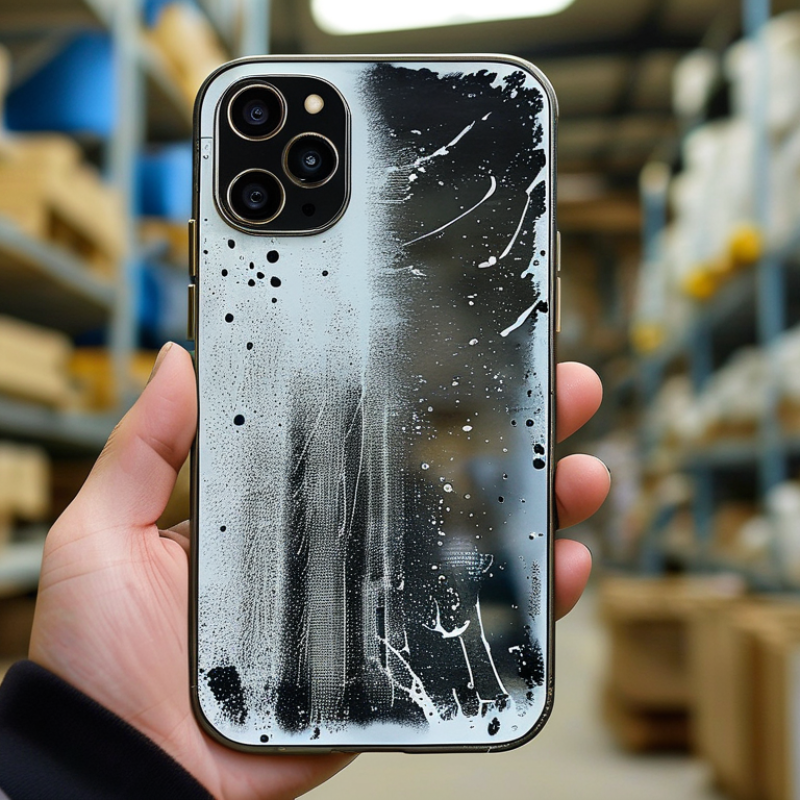
7 Best Film Phone Case Manufacturers for Global Buyers

Definition and Scope of Film Phone Case Manufacturing

A film phone case is a slim protective cover made from flexible layers rather than thick, rigid shells. Manufacturers commonly use TPU, PET, silicone film, or blended polymers. These materials can protect phone backs from scratches, light impact, and daily friction. The design usually includes precise openings for cameras, buttons, speakers, and charging ports. Fit matters greatly. A small alignment error can make an expensive case unusable.

Film phone case manufacturing covers much more than material cutting. It includes product design, film selection, surface treatment, printing, lamination, heat forming, edge finishing, and packaging. Skilled factories check film thickness, color consistency, adhesive strength, and transparency during production. They also test bending, abrasion, temperature changes, and repeated installation. These checks help buyers compare stable suppliers instead of relying only on attractive samples.

In practice, no production line is flawless. Minor color variation may appear between batches. That deserves attention. Global buyers should request material specifications, inspection records, sample approval procedures, and clear tolerance limits. Packaging should prevent dust, pressure marks, and moisture during transport. Manufacturers also need responsible sourcing and product information that supports applicable market requirements. A reliable supplier explains limitations honestly, especially when a thin film case cannot replace heavy-duty protection. Experience shows that simple communication often prevents costly rework.
Key Criteria for Comparing Global Film Phone Case Suppliers

Comparing global film phone case suppliers requires more than checking catalog photos and quoted prices. Start with material evidence: ask for film thickness, hardness, transparency, anti-yellowing performance, and adhesive or edge-sealing specifications. A reliable supplier should provide current test reports and explain which laboratory performed them. Request samples from different production batches. One sample can look excellent and still fail after weeks of heat, pocket friction, or repeated cleaning.

Manufacturing control matters just as much. Review quality checkpoints for cutting accuracy, camera openings, surface defects, and fit across phone models. Ask whether operators use calibrated measuring tools and whether rejected units are recorded. Drop-test results are useful, but they should identify height, surface, device model, and test quantity. Vague claims are not evidence. Factory video calls, audit documents, and traceable batch codes can reveal more than polished brochures.

Global buyers also need commercial reliability. Compare minimum order quantities, sample fees, tooling charges, production lead times, packaging strength, and replacement policies. Confirm how the supplier handles design changes and delayed shipments. Communication speed helps, but clear written answers matter more. Currency, shipping terms, and import documents should match your market requirements. The comparison is rarely tidy. A lower price may hide weaker inspection or unstable material quality. I would keep a scoring sheet, yet leave room for judgment, because supplier data is sometimes incomplete or difficult to verify.

Key Criteria for Comparing Global Film Phone Case Suppliers

Recommended buyer evaluation weighting for global sourcing decisions

Product quality and consistency receive the highest weighting because film phone cases must maintain accurate fit, optical clarity, adhesion, and durability across production batches. Compliance, production capacity, lead time, customization capability, pricing, and after-sales support should also be assessed before selecting a supplier.

Seven Leading Film Phone Case Manufacturers for International Buyers

Seven Leading Film Phone Case Manufacturers for International Buyers

International buyers need more than attractive samples. They need stable materials, repeatable production, and clear export documentation. Seven leading manufacturers usually stand out through different strengths: optical film molding, flexible TPU processing, recycled materials, shock-resistant structures, custom printing, slim protective designs, and high-volume assembly.

A reliable supplier should provide material specifications, impact-test records, and sample approval procedures. Ask for film thickness, edge hardness, yellowing resistance, and compatibility with wireless charging. During factory discussions, I also check molding lines, inspection stations, and packaging controls. Small details matter. A loose camera opening can damage the user experience.

I have learned that the cheapest quotation is rarely the safest choice. One supplier may offer excellent clarity but struggle with color consistency. Another may deliver strong protection but miss a tight production deadline. Requesting a pilot order can reveal these weaknesses before a large shipment. It also tests communication across time zones, a problem that is easy to underestimate. Manufacturers serving international buyers should explain lead times, payment terms, warranty limits, and product testing in plain language. Certifications should be verifiable, not merely printed on a brochure. No factory is flawless. A thoughtful buyer should record defects, review corrective actions, and leave room for improvement.

Materials, Customization, Production, and Quality Comparison

Choosing among the 7 best film phone case manufacturers requires more than comparing catalog photos. Global buyers should examine TPU, PC, recycled materials, and protective film construction. Flexible TPU absorbs daily impacts, while rigid PC improves structure and print stability. Soft-touch coatings feel attractive, but they may collect dust or wear faster. Ask for material certificates, thickness data, and sample testing before placing a large order.

Customization can include logos, colors, textures, packaging, camera protection, and MagSafe-compatible structures. Production quality depends on mold accuracy, color matching, injection control, and assembly inspection. A reliable manufacturer should explain its minimum order quantity, sample timeline, tooling cost, and defect policy clearly. Request a pilot run. Small errors often appear only after repeated use, especially around buttons, corners, and charging openings. I have found that beautiful samples can hide weak long-term performance.

Tips: Test at least three samples. Check yellowing, grip, print adhesion, and wireless charging. Measure case fit on several phone units, not one device. Review inspection photos, but do not treat photos as proof. Independent testing adds confidence. Also compare lead times during busy seasons. A low price may reflect thinner materials, weaker packaging, or limited quality control. One issue remains easy to overlook: sustainable claims need evidence, not attractive wording.

Export Support, Pricing Factors, and Buyer Selection Guide

7 Best Film Phone Case Manufacturers for Global Buyers

Export Support, Pricing Factors, and Buyer Selection Guide

Choosing among film phone case manufacturers requires more than comparing catalog photos. Experienced buyers request physical samples, production videos, and clear material specifications. Check film thickness, edge adhesion, camera clearance, and resistance to yellowing. A case may look smooth under showroom lighting but fail after repeated pocket use. That detail matters.

Export support can reduce costly delays. Reliable manufacturers should provide commercial invoices, packing lists, carton dimensions, and accurate product descriptions. They should also explain destination-market labeling and documentation requirements. Ask about sample lead times, production capacity, inspection procedures, and replacement policies. Communication should remain clear when specifications change. Small misunderstandings become expensive.

Pricing depends on material grade, mold complexity, printing, packaging, order quantity, and shipping terms. Compare complete landed costs, not only the factory unit price. A low quote can hide weak packaging or inconsistent sizing. I have learned that cheaper samples sometimes create higher return costs. This is worth challenging. Buyers should request a written quotation with tooling fees, payment stages, delivery estimates, and quality tolerances. A practical supplier selection includes sample testing, reference checks, factory verification, and a trial order. Do not rely on promises alone. Test every claim.

7 Best Film Phone Case Manufacturers for Global Buyers - Export Support, Pricing Factors, and Buyer Selection Guide

Rank Anonymized Manufacturer Profile Typical Production Base Main Product Capability Common MOQ Range Indicative Sample Lead Time Typical Bulk Lead Time Export Support Indicative FOB Price Range* Key Pricing Factors Best Buyer Fit Selection Score
1 Profile A
High-volume OEM
East Asia TPU film cases, hybrid cases, camera-protection designs, private-label packaging 500–1,000 pieces per design 5–10 working days 20–35 working days Commercial invoice, packing list, export cartons, barcode labeling, private-label packaging coordination US$1.20–3.20 per piece Material thickness, case structure, printing method, packaging, order volume, and device-model count Importers and distributors requiring repeat production and broad model coverage ★★★★★
2 Profile B
Flexible customization
East Asia Clear TPU cases, soft film cases, color-coated cases, logo printing, retail-ready packs 300–800 pieces per design 7–12 working days 25–40 working days Sample approval, carton marking, basic compliance document support, shipment consolidation US$1.40–3.80 per piece Custom color matching, logo area, surface finish, packaging format, and tooling requirements Online brands and regional wholesalers testing several designs ★★★★☆
3 Profile C
Premium finish
East Asia Matte and soft-touch film cases, anti-yellowing TPU, magnetic-ring options, premium gift boxes 500–1,500 pieces per design 7–14 working days 25–45 working days Pre-production samples, packaging artwork checks, carton specifications, export documentation US$2.20–5.50 per piece Optical clarity, anti-yellowing additives, coating quality, magnet components, and premium packaging Consumer-electronics retailers and buyers targeting higher retail prices ★★★★☆
4 Profile D
Low-MOQ supplier
South or Southeast Asia Basic TPU film cases, transparent cases, standard printed patterns, simple polybag packaging 100–300 pieces per design 7–15 working days 20–35 working days Basic export paperwork, mixed-model packing, carton labeling, and small-order consolidation US$1.50–3.60 per piece Smaller order size, standard materials, limited color choices, packaging simplicity, and freight method Start-ups, small retailers, and buyers validating demand before scaling ★★★★☆
5 Profile E
Fast replenishment
East or Southeast Asia Fast-moving smartphone-model cases, ready designs, clear cases, flexible replenishment programs 200–500 pieces per design 5–8 working days 15–30 working days Model-based packing lists, replenishment scheduling, export cartons, and standard shipping documents US$1.30–3.40 per piece Stock availability, device-model demand, rush production, packaging, and air-freight requirements Distributors needing short replenishment cycles for popular phone models ★★★★☆
6 Profile F
Sustainable materials
East Asia Recycled-content TPU options, paper packaging, solvent-reduced printing, standard protective film cases 500–1,000 pieces per design 10–15 working days 30–45 working days Material declarations, packaging specifications, recycling information, and standard export documents US$2.00–4.80 per piece Recycled content, material certificates, packaging design, traceability requirements, and testing requests European and North American buyers with sustainability requirements ★★★★☆
7 Profile G
Specialized protection
East Asia Shock-absorbing TPU cases, raised bezels, camera protection, textured grip surfaces, hybrid film construction 800–2,000 pieces per design 10–18 working days 30–50 working days Prototype development, product specification sheets, packaging coordination, and export documentation US$2.50–6.50 per piece Protective structure, material hardness, component assembly, drop-test requirements, and tooling complexity Specialty retailers and brands positioned around durability and device protection ★★★★☆
*Indicative FOB price ranges are market-reference estimates for standard wholesale orders and may vary by smartphone model, material specification, order quantity, customization, packaging, tooling, inspection, and shipping terms. Lead times generally begin after artwork, samples, specifications, and payment are confirmed.