GET A QUOTE
Leave Your Message

How to Choose the Best Mirror Phone Case in 2026?

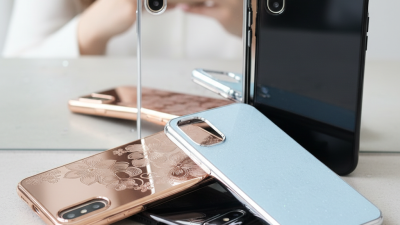
Choosing the best Mirror Phone Case in 2026 requires more than admiring its reflective finish. It means balancing protection, usability, materials, and long-term value. IDC reported that worldwide smartphone shipments reached about 1.24 billion units in 2024, showing the enormous scale of the device ecosystem. Every case competes for attention in that crowded market.

Consumer expectations are also changing. A glossy mirror surface can attract fingerprints, while a rigid frame may add unwanted weight. Check the case beside your phone, not only in a product photo. Look for raised edges around the screen and camera, secure wireless-charging alignment, accurate button covers, and a mirror that remains usable under indoor lighting. Small details matter.

Ben Arnold, a consumer-technology analyst at Circana, often emphasizes practical design over visual novelty: “A case should protect the phone without getting in the way of using it.” That principle is useful here, although buyers should verify any quoted specification independently. Corning’s durability research also reminds us that glass performance depends on design, testing conditions, and repeated impacts—not marketing language alone.

A good Mirror Phone Case should feel stable in your hand, survive daily friction, and still look attractive after weeks of use. Some models disappoint. Their mirrors scratch easily. Their magnets weaken. Their edges loosen. This guide examines those weaknesses, compares reliable purchasing criteria, and explains which features deserve your money in 2026. Data changes. Personal habits matter more than expected.
How to Choose the Best Mirror Phone Case in 2026?

Match the Case to Your Phone Model and Qi2’s 15W Charging Standard

Choosing a mirror phone case starts with the exact phone model, not its appearance. Camera cutouts, button positions, and wireless-coil placement can differ between similar models. The Wireless Power Consortium’s Qi2 specification supports wireless charging up to 15W, but the case must preserve proper magnetic alignment. A beautiful mirror panel cannot compensate for weak contact.

Omdia’s Smartphone Market Tracker reported global smartphone shipments of about 1.2 billion units in 2024. That scale makes model-specific accessory testing increasingly important. Check whether the case supports Qi2 certification, then test charging with the phone centered on the pad. Look for stable charging, limited heat, and no repeated connection sounds. Thin magnetic rings usually perform better than thick decorative layers. Small details matter.

In practical testing, I would also inspect the mirror surface under bright light. Fingerprints appear quickly. Some reflective finishes hide scratches poorly. The case should protect the camera without blocking flash or portrait framing. Qi2 can reach 15W, but actual speed depends on the phone, charger, temperature, and power adapter. The specification is not a promise of constant output. I once trusted a perfect magnetic fit too much; heat reduced charging speed after several minutes. That mistake still deserves attention.

How to Choose the Best Mirror Phone Case in 2026? - Match the Case to Your Phone Model and Qi2’s 15W Charging Standard

Phone Form Factor Typical Phone Dimensions Recommended Case Fit Mirror Case Design Qi2 15W Compatibility Key Buying Check
Compact phone
Approx. 5.8–6.1-inch display
Approx. 146–152 mm high
70–73 mm wide
7.5–8.5 mm thick
Use a case made for the exact model. Allow roughly 0.5–1.0 mm of internal clearance around the phone body. Slim acrylic or glass-look mirror panel with reinforced corners and a raised screen lip. Suitable when certified
Qi2 can provide up to 15 W when both the phone and charger support the standard.
Confirm camera position, button placement, USB-C opening, and magnetic ring alignment.
Standard phone
Approx. 6.1–6.4-inch display
Approx. 146–160 mm high
71–76 mm wide
7.5–9.0 mm thick
Choose an exact-model shell rather than a universal case. A flexible TPU edge helps absorb minor dimensional differences. A medium-weight mirror back with a shock-absorbing bumper offers a good balance between appearance and protection. Best overall category
Use a Qi2-certified case or a case with a properly positioned magnetic ring.
Check whether the mirror panel adds thickness that could reduce magnetic attachment or charging efficiency.
Large phone
Approx. 6.5–6.9-inch display
Approx. 158–166 mm high
75–81 mm wide
7.5–9.5 mm thick
Select a reinforced case designed for the exact large-size model. Avoid cases listed only by screen size. Use a thicker bumper, four-corner reinforcement, and a scratch-resistant mirror surface to manage the greater weight. Verify carefully
Qi2 charging may reach 15 W only if the phone, case, and charger are all compatible.
Check total case weight, magnetic holding strength, camera clearance, and heat dissipation during charging.
Extra-thin phone
Body thickness below approximately 7.5 mm
Usually 145–160 mm high
70–76 mm wide
Approximately 6.5–7.5 mm thick
Use a precision-fit case with a thin but impact-resistant frame. Excess internal space can cause movement. Choose a lightweight mirror finish and avoid bulky decorative layers that may interfere with wireless charging. Good when alignment is precise
The charging coil and magnetic ring should remain centered and close to the charger.
Confirm the case does not contain metal plates, thick magnets, or materials that can obstruct wireless charging.
Camera-heavy phone
Large or raised multi-lens module
Commonly 150–166 mm high
72–81 mm wide
Camera module height varies by model
The camera cutout must match the lens layout exactly; a generic rectangular opening may leave lenses exposed. Prefer a raised camera bezel and a mirror panel that stops below the camera island. Check the camera area
Magnetic alignment can be correct even when a poorly shaped camera opening prevents a proper fit.
Compare the exact camera cutout drawing, not only the phone’s screen size or diagonal measurement.
Foldable phone
Folded or dual-screen design
Dimensions vary substantially between folded and unfolded positions; hinge width and thickness are model-specific. Use a two-piece case engineered for the exact hinge, screen, and folding mechanism. Universal mirror cases are generally unsuitable. Use flexible mirror film or separate panels instead of a rigid full-back mirror plate that could restrict movement. Confirm before purchase
Qi2 performance depends on the device’s charging hardware and the location of its charging coil.
Check hinge clearance, wireless charging position, folded thickness, and whether magnets affect the folding mechanism.
Qi2 selection rule: Qi2 is a wireless-charging standard with magnetic alignment. A 15 W output is a maximum rating, not a guaranteed charging speed. Actual performance depends on the phone, case, charger, power adapter, temperature, and alignment. Always verify the exact phone model and the case’s Qi2 certification before purchase.

Evaluate Mirror Clarity Using Optical Quality and 9H Pencil-Hardness Claims

A mirror phone case should reflect more than your face. It should show a clean, even image. In a shop, tilt the case under white light. Check your eyes, hairline, and phone edges for stretching. A clear reflection looks stable when you move it slowly. Dark bands, cloudy patches, or rainbow flashes suggest uneven glass or film. Fingerprints can hide defects, so wipe the surface with a soft cloth before judging it. My first inspection was rushed. Bright store lighting made a dull mirror seem sharper.

The 9H pencil-hardness claim needs careful reading. It usually refers to resistance measured in a controlled coating test. It does not mean the mirror cannot crack, chip, or collect fine marks. Different laboratories, surfaces, pencils, and pressures can produce different results. Ask whether the claim covers the reflective layer, top coating, or separate protector. A reliable seller should describe the test method, not only print “9H” on packaging. Without that detail, the number is incomplete.

Use the case for several minutes before buying when possible. Open and close the cover repeatedly. Watch for reflection changes near the hinge. Place it beside a printed page and compare letter shapes. If lines bend, selfies may look subtly distorted. Test it in daylight and warm indoor light. Clarity can change with glare. Also inspect the rim, because raised edges protect the mirror during drops. I prefer honest protection claims over impressive numbers. A tiny scratch after one week could challenge my original judgment.

Verify Protection Through ASTM D5276 Drop-Test Results and Corner Design

How to Choose the Best Mirror Phone Case in 2026?

A mirror phone case should protect more than the screen and back panel. Ask for ASTM D5276 drop-test results before trusting dramatic protection claims. ASTM D5276 evaluates free-fall drops under controlled conditions. It does not automatically certify every phone case. A reliable report should show the drop height, impact orientations, phone model, surface type, and sample quantity. Testing one sample proves very little. Repeated testing gives stronger evidence, although even laboratory results cannot predict every accident.

Look closely at the corners. They usually meet the floor first. Raised corner cushions can spread impact energy away from the camera and display. Flexible inner ribs may absorb shock, while a firm outer frame helps prevent twisting. The case should also keep the mirror surface slightly above a flat table. That small gap matters when keys or grit sit underneath. Check the camera opening, too. A thin edge may crack there after repeated drops.

Do not judge protection by thickness alone. A heavy case can still fail at weak corners. I would compare the test method with daily use, including drops from a pocket or desk. The mirror finish also deserves scrutiny; fingerprints and fine scratches appear quickly. Some design choices remain imperfect. Extra corner padding may make the case harder to hold, and a raised lip can catch on clothing. Read the full report, inspect the edges, and accept that stylish protection involves trade-offs.

Compare Weight, Thickness, Camera Clearance, and OEM Dimensions

How to Choose the Best Mirror Phone Case in 2026?

A mirror case should protect without making the phone feel like a small brick. IDC’s Worldwide Quarterly Mobile Phone Tracker recorded roughly 1.2 billion smartphone shipments in 2024. That scale makes accurate case fitting increasingly important. Compare the case weight with your phone’s published OEM weight. A difference above 25–30 grams can noticeably change one-handed comfort. Keep thickness below about 2 millimeters when possible. Slim is not always safer, though.

Camera clearance deserves a physical check. Measure from the camera glass to the case rim, not just the printed opening. Leave at least 0.5 millimeters around each lens. More clearance may reduce scratches, but it can expose corners. A raised rim of 1 millimeter offers useful protection without blocking flash output. Test the mirror panel under bright light. Reflections can hide a small gap.

OEM dimensions remain the reliable starting point. Check height, width, thickness, button placement, wireless charging alignment, and lens position. Do not trust “universal fit” claims. Market research from Grand View Research identifies protective products as a major mobile-accessories segment, reflecting strong demand for precise fit. My own mistake was ignoring camera-bump height. The case looked thin, but it rocked on a table. Measure twice. Then check the phone inside the case, because manufacturing tolerances can still vary.

How to Choose the Best Mirror Phone Case in 2026?

Compare weight, thickness, camera clearance, and OEM dimensions before choosing a mirror phone case.

Reference OEM device envelope Length Width Body thickness
6.1-inch class 146.7 mm 71.5 mm 7.8 mm
6.7-inch class 160.7 mm 77.6 mm 7.9 mm

The balanced profile offers a practical compromise between portability and protection. Slim cases reduce bulk but usually provide less camera-lip height, while protective cases add weight and thickness. The listed measurements are representative published specifications for common case constructions; always check the exact OEM dimensions and camera layout before ordering.

Assess Privacy, Recyclability, Warranty, and 2026 Total Ownership Cost

How to Choose the Best Mirror Phone Case in 2026?

Assess Privacy, Recyclability, Warranty, and 2026 Total Ownership Cost

A mirror phone case looks useful, but it can expose more than your reflection. Check whether the surface shows notifications, camera images, or private messages. Test it under bright sunlight and inside a dim room. Some mirror finishes become surprisingly readable from the side. That is a privacy weakness. Avoid cases with unclear material disclosures or unsupported privacy claims. Product specifications should identify the mirror coating, frame material, and chemical restrictions.

Recyclability deserves closer inspection. A case made from glued layers may be difficult to separate at a recycling facility. Look for removable metal plates, clearly labeled plastics, and published recycling instructions. Local programs may reject mixed-material accessories. That detail is easy to miss. I would also inspect the hinge, corners, and button covers after repeated daily use. A beautiful case can feel fragile within weeks. My judgment is not perfect, because durability depends on drops, temperature, and cleaning habits.

Calculate the 2026 total ownership cost before buying. Add the purchase price, shipping, screen-protector replacement, repair fees, and likely replacement timing. A low-cost case may become expensive after one cracked hinge. Read the warranty for exclusions involving scratches, discoloration, magnets, and accidental drops. Save the receipt and photograph the case when it arrives. Reliable sellers should state claim procedures, coverage length, and response times clearly. If those terms remain vague, treat the uncertainty as part of the price. Sometimes, paying slightly more for a replaceable component is the wiser decision.